COUNTER-STRIKE: GLOBAL OFFENSIVE
Counter-Strike: Global Offensive (CS: GO) expands upon the team-based action gameplay that it pioneered when it was launched 19 years ago.


Counter-Strike: Global Offensive (CS:GO) is a multiplayer first-person shooter developed by Valve and Hidden Path Entertainment. It is the fourth game in the Counter-Strike series. Developed for over two years, Global Offensive was released for Windows, macOS, Xbox 360, and PlayStation 3 in August 2012, and for Linux in 2014. Valve still regularly updates the game, both with smaller balancing patches and larger content additions.
The game pits two teams, Terrorists and Counter-Terrorists, against each other in different objective-based game modes. The most common game modes involve the Terrorists planting a bomb while Counter-Terrorists attempt to stop them, or Counter-Terrorists attempting to rescue hostages that the Terrorists have captured. There are eight official game modes, all of which have distinct characteristics specific to that mode. The game also has matchmaking support that allows players to play on dedicated Valve servers, in addition to community-hosted servers with custom maps and game modes. A battle-royale game-mode, "Danger Zone", was introduced in December 2018.
Global Offensive received positive reviews from critics on release, who praised the game for its gameplay and faithfulness to the Counter-Strike series, though it was criticized for some early features and the differences between the console and PC versions. Since its release, it has drawn in an estimated 11 million players per month, and remains one of the most played games on Valve's Steam platform. In December 2018, Valve transitioned the game to a free-to-play model, focusing on revenue from cosmetic items.

CSGO WORLD CHAMPIONSHIP
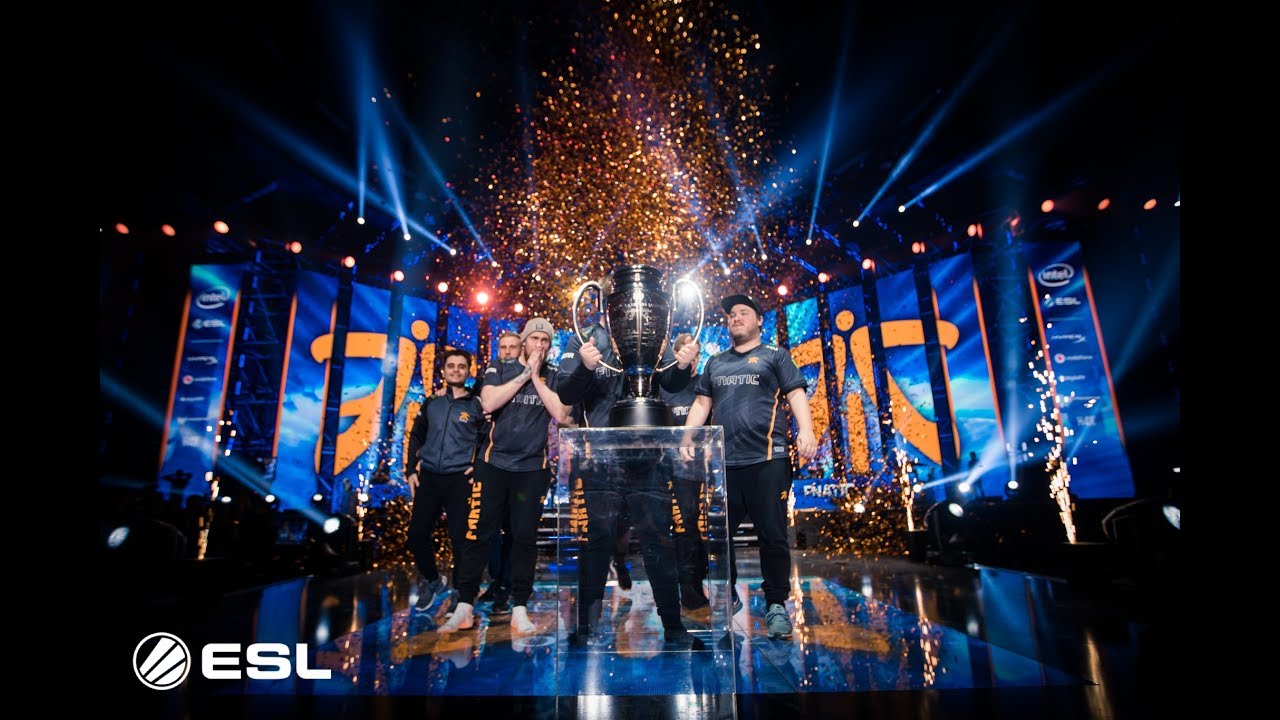

Counter-Strike: Global Offensive Major Championships, commonly known as the Majors, are Counter-Strike: Global Offensive (CS:GO) esports tournaments sponsored by Valve, the game's developer. The first CS:GO Major took place in 2013 in Jönköping, Sweden and was hosted by DreamHack with a total prize pool of US$250,000 split among 16 teams.
Martin Luther

LIST OF MAJOR CHAMPIONSHIPS
HISTORY
Counter-Strike: Global Offensive is a multiplayer first-person shooter video game developed by Hidden Path Entertainment and Valve. It is the fourth game in the Counter-Strike series. The first game in the series, Counter-Strike 1.6, was officially released in 2000 and competitive play began soon after. The first significant international tournament was the 2001 Cyberathlete Professional League Winter Championship,[1] considered the first "Major".[2] The CPL Summer and Winter Championships, along with the World Cyber Games, Electronic Sports World Cup and Intel Extreme Masters World Championships, were considered Majors by the community, although Valve did not sponsor or give any official designation to the tournaments.[1]
Swedish teams, most notably SK Gaming,[3][4] dominated these early Majors but the Polish roster known as the Golden Five were the most successful lineup.[5][6] Many teams from other parts of the world would win Majors, including Team 3D from the United States at CPL Winter 2002[7] and WCG 2004,[8] NoA from Norway at CPL Winter 2004,[9] mibr from Brazil at ESWC 2006,[10] and WeMade FOX from South Korea at WEM 2010.[11]
On September 16, 2013, a year after the release of Global Offensive, Valve announced a US$250,000 community-funded prize pool for the first CS:GO Major.[12] The money was partially community-funded through the game's Arms Deal update, which allowed players to buy in-game skins.[1] Valve announced the tournament would take place in Sweden and would be hosted by DreamHack.[13] The tournament took place in late November and was won by the Swedish team Fnatic who upset Ninjas in Pyjamas in the finals.[14][15] After Dreamhack 2013, Valve announced they would partner with tournament organizers to host three Majors per year. These Majors are the most prestigious events in the competitive CS:GO scene, and the professional players' legacies are often judged by their performances at these tournaments.[16][17][18]
The early Majors were dominated by Swedish teams, as Fnatic and NiP combined to win the four of the first six Majors. NiP playing in five of those six finals. When Fnatic won Cologne 2015, they became the first team to win back to back Majors, and the first to win a third Major in total.[19] Only Astralis would go on to match that total.
At the end of 2015, Valve announced that MLG would host the first Major in North America.[20] On February 23, 2016, with MLG Columbus 2016 coming up, Valve announced a permanent increase in the prize pool from US$250,000 to US$1,000,000.[21][22] However, Valve reduced the number of Majors per year from three to two. Luminosity Gaming, a Brazilian team, won the event to becomes the first non-European team to win a Major.[23] This roster would also go on to win back to back Majors, with their second as SK Gaming at ESL One Cologne 2016.[16] Gambit Esports, from Kazakhstan, won PGL Major Kraków 2017 to become the first Asian and CIS team to win a Major.[24]
On December 13, 2017, the general manager of ELEAGUE, the hosts of the ELEAGUE Major: Boston 2018, announced a revised format designed by Valve and ELEAGUE that would expand the number of teams in the Major from sixteen to twenty-four.[25] This was also the first Major to take place in multiple cities, as the group stages took place in Atlanta at the Turner Studios.[26] Cloud9, an American team, won the event to become the first North American team to win a Major.[27]
After Boston 2018, the Danish team Astralis became the top team in CS:GO and one of the best teams in Counter-Strike history.[28] With wins at London 2018, Katowice 2019, and Berlin 2019, Astralis become the first team to win three Majors in a row and four majors total.[29] After Berlin 2019, Valve and ESL announced the following Major, ESL One Rio 2020, which was to be the first Major to be hosted in South America.[30] Rio 2020, originally scheduled for May, was then postponed to November due to the COVID-19 pandemic. The November Major was announced with a US$2,000,000 prize pool, combining the amounts that would have been set aside for both Majors.[31] In September 2020, the Rio Major was officially canceled due to COVID-19.[32


CONTACT SUPPORT
How Can We Help?
GIVE US YOUR FEEDBACK
This is your Feedback section paragraph. Encourage your site visitors to rate and add feedback about your products.